What "Available in Your Area" Leaves Out
A coverage map answers one question: can a provider sell you service? It does not tell you how that service will perform at your address.

The majority of businesses today have become intrinsically reliant on the Internet. From serving as an accessible means to communicate globally, to hosting e-commerce stores, to conducting online credit transactions and transfers, high-speed Internet connections have become paramount for businesses of all sizes. There are numerous broadband technologies to consider when shopping in today's business marketplace— from DSL to copper, to fiber, to satellite, to fixed wireless Internet.
When exploring fixed wireless connections, a variety of questions may come to mind. For example, is fixed wireless Internet reliable? Is fixed wireless Internet affected by weather? Does fixed wireless Internet perform as well as a wired connection?
To answer these questions, let's first take a step back and ask the foundational question, "what is fixed wireless Internet?"
Fixed wireless provides high-speed broadband Internet access to a single location via radio waves. By utilizing antennas, towers, and an express line of sight (LoS) to transmit point-to-point and point-to-multi-point signals, fixed wireless technology is deployable in a fraction of the time – and for a fraction of the cost – of terrestrial fiber. Unlike a standard Wi-Fi connection, fixed wireless networks can be directionally focused to produce dedicated speeds of up to 10 Gbps. When configured correctly, fixed wireless technology can withstand extreme weather conditions such as heavy rain, high winds, and severe temperatures, both hot and cold, with the ability to operate over licensed or unlicensed wireless spectrum.
Although trusted and utilized by global militaries and law enforcement for upwards of a century, over the years of perfecting fixed wireless for commercial use, many small carriers deployed inexpensive equipment that operated across only one frequency. This practice caused a multitude of problems, including interference from other links in the surrounding area. The result? A deceiving reputation for being slow, unreliable, and inferior to wired networks.
Another common misconception that has been tagged to fixed wireless technology is that it is equivalent to satellite Internet quality of service (QoS). Satellite Internet, which is notoriously known for its high latency, operates by transmitting signals from a dish to a satellite orbiting more than 20,000 miles above the earth. This distance is drastically different than a 20-mile point-to-point fixed wireless link.
Here are eight facts that set the record straight about fixed wireless Internet:
As with all types of broadband connections, fixed wireless speeds and service varies from provider to provider. From technical equipment upgrades to improved and simplified network management through software, commercial fixed wireless networks have advanced rapidly in recent years. When topped off with the ability to combine and switch between more diversified spectrum links (both licensed and unlicensed), properly-deployed modern fixed wireless networks can deliver gigabit connection speeds that rival fiber connections.
When we think of our Internet connection transmitting data wirelessly, the effects of weather can be a natural concern. Thus, it's no surprise that fixed wireless providers are often asked, "Does weather affect fixed wireless Internet?"
The answer? Yes, it can if it's not deployed correctly – and that is one of the primary reasons the technology gets overlooked. However, with informed engineering and experience, fixed wireless networks can be unaffected by weather. For example, before building out any wireless network, GeoLinks' in-house engineering team first looks at an area's terrain, historical weather patterns, rain fade, and thermal ducting. Based on the data collected and considering the distance of the shot and required bandwidth, they choose the best frequency or frequencies and carrier-grade equipment for the specific region and build. With multiple failover paths, every GeoLinks network eventually connects to a fiber optic backbone to ensure true network redundancy. The result? A stable, high-speed fixed wireless network designed to withstand the elements.
Plus, GeoLinks can craft a disaster recovery plan for your business to help you combat any weather event or natural disaster you encounter.
In addition to being weather-proof, Fixed Wireless Internet is:
A great case study to prove the potential of a well-constructed fixed wireless network is GeoLinks' project with global coffee distributor Coffee Bean & Tea Leaf. In 2016, Coffee Bean & Tea Leaf was slated to open a series of new locations in Southern California in just 20 days and needed more than 30 circuits to support their public Wi-Fi and POS systems. The company initially contracted to provide a terrestrial connection was projecting massive delays and restrictions of available bandwidth. To meet their quickly approaching deadlines, the company looked to contract an outside local provider to administer a temporary solution. Enter GeoLinks.
GeoLinks successfully delivered more than 30 redundant circuits to all new store locations in just 14 days, enabling the stores to open as planned.
GeoLinks' initially was hired as a temporary backup solution while Coffee Bean & Tea Leaf's copper network was installed. However, our seamless operation, combined with further buildout delays, led Coffee Bean & Tea Leaf to cancel its copper installations altogether and to use GeoLinks as their primary provider.
The decision to use GeoLinks paid off again when Southern California was hit with a massive storm in the Spring of 2017, causing outages across the state as California's poor irrigation caused underground reservoirs to flood for nearly two weeks straight. As terrestrial cables live underground, many of Coffee Bean & Tea Leaf's pre-existing locations operated on copper and experienced extended outages and downtime. All of their locations served by GeoLinks, on the other hand, remained unaffected and avoided outages and downtime altogether.
Having ample tower coverage supported by fiberoptic backbones throughout Southern California, GeoLinks' team of expert engineers then were able to construct a fully redundant network in just 60 days. Using multiple paths over various frequencies to deliver long-haul middle mile, the system was built to seamlessly failover when rain or packet loss was detected, preventing the island from ever experiencing a perceived outage.
So, let's answer our initial questions. When engineered effectively, fixed wireless Internet is a reliable technology that can withstand extreme weather conditions and perform equal, if not better than, a wired connection. With innovative companies like GeoLinks building businesses and anchor institutions multi-gigabit networks that guarantee ultra-low latency, virtually no jitter, 99.99% uptime, fixed wireless Internet may very well be the best Internet solution for your business.
Connectivity moves fast, and so do we. Explore more articles on network reliability, technology trends, and what to expect from an internet provider that actually shows up.
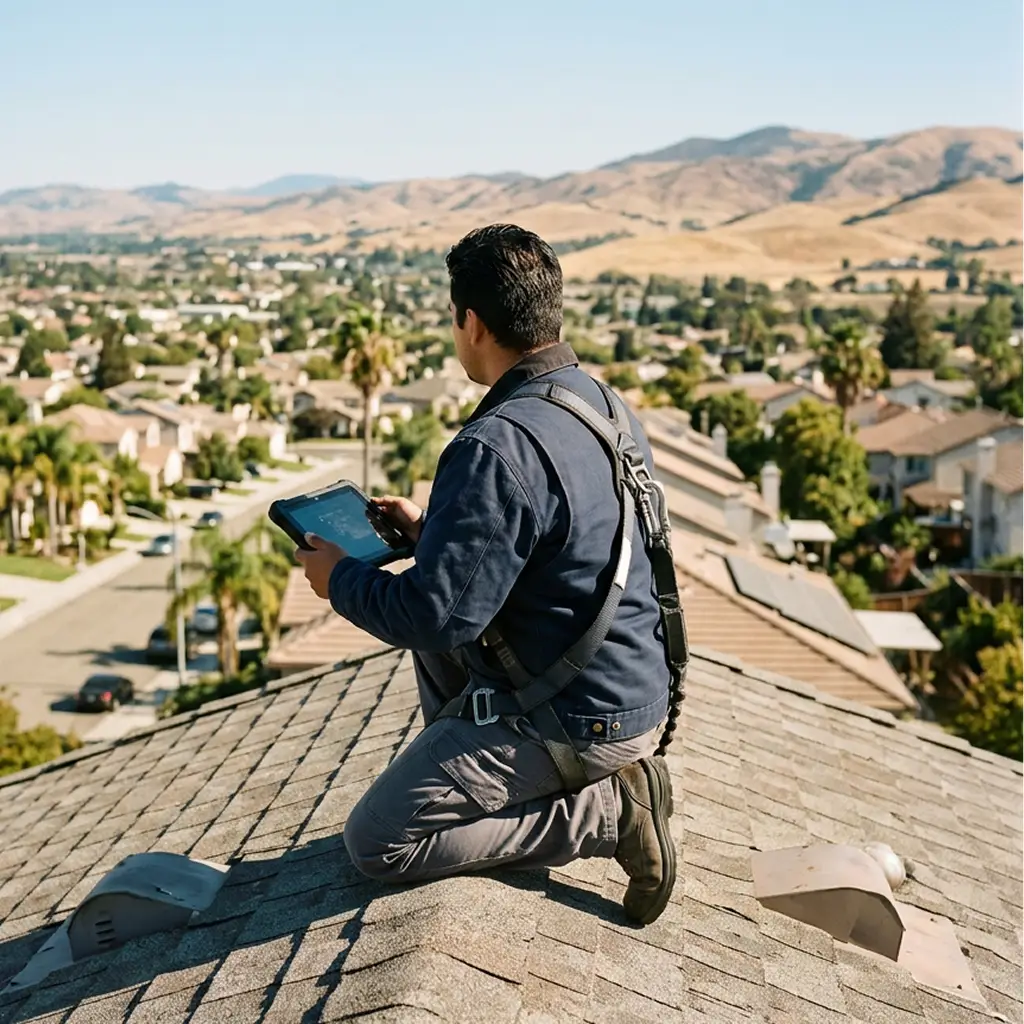
A coverage map answers one question: can a provider sell you service? It does not tell you how that service will perform at your address.
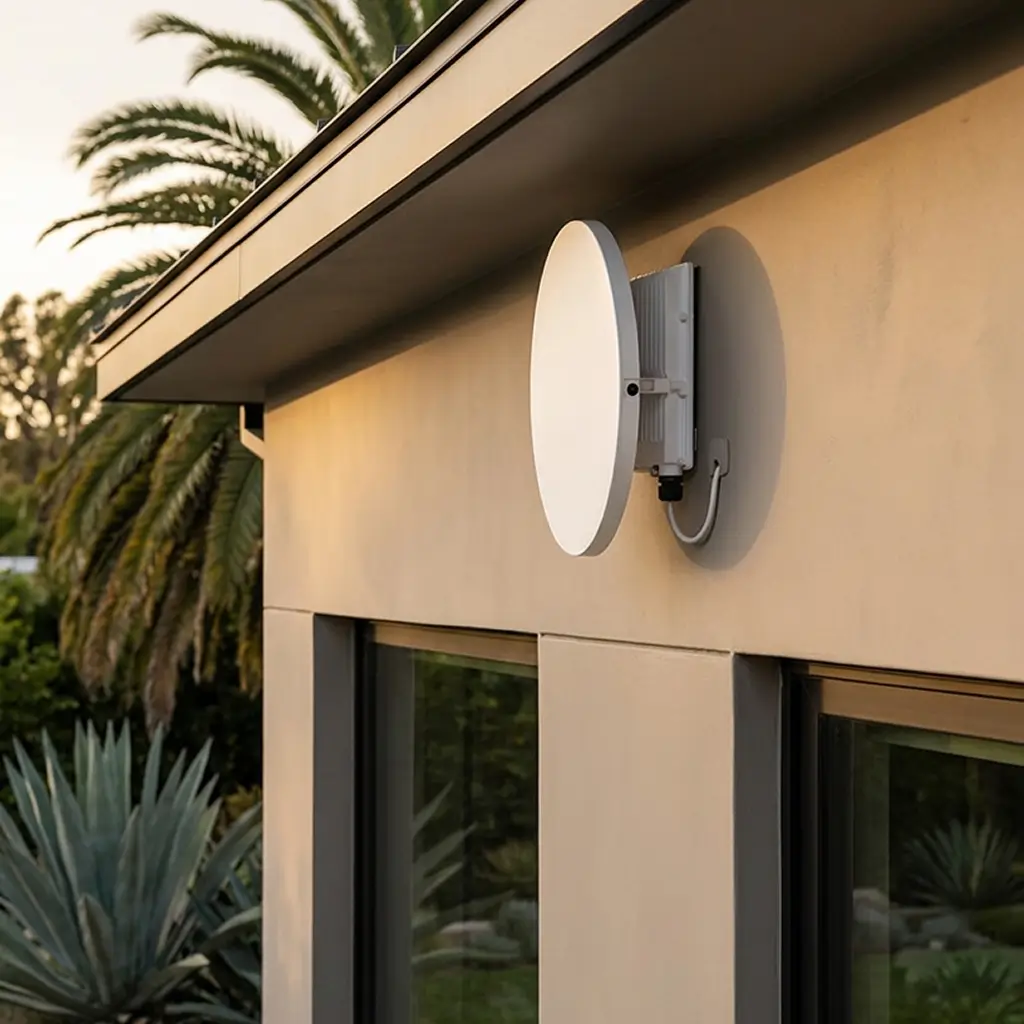
Both arrive without a cable, so they get filed under the same name. They run on different networks built for different jobs.

Fiber, cable, 5G and satellite each reach your address a different way. So does a fifth option that most people have never had explained to them.